Sheet Pan Salmon & Vegetables

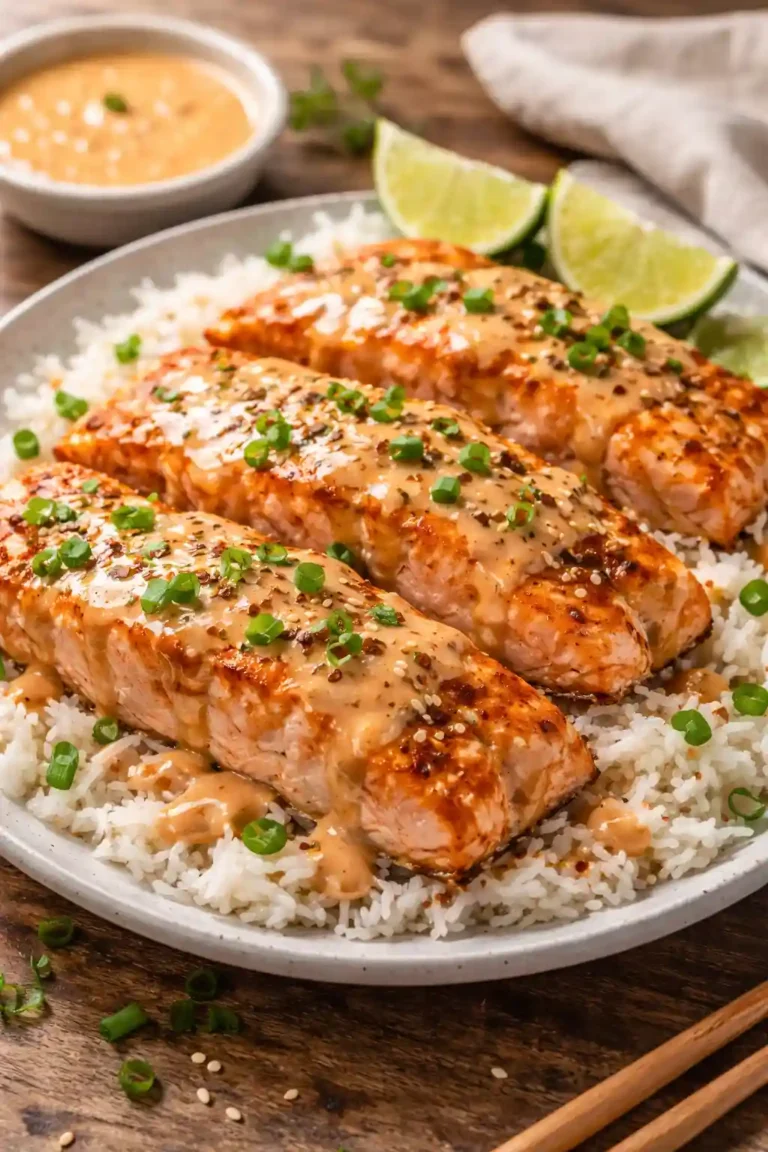
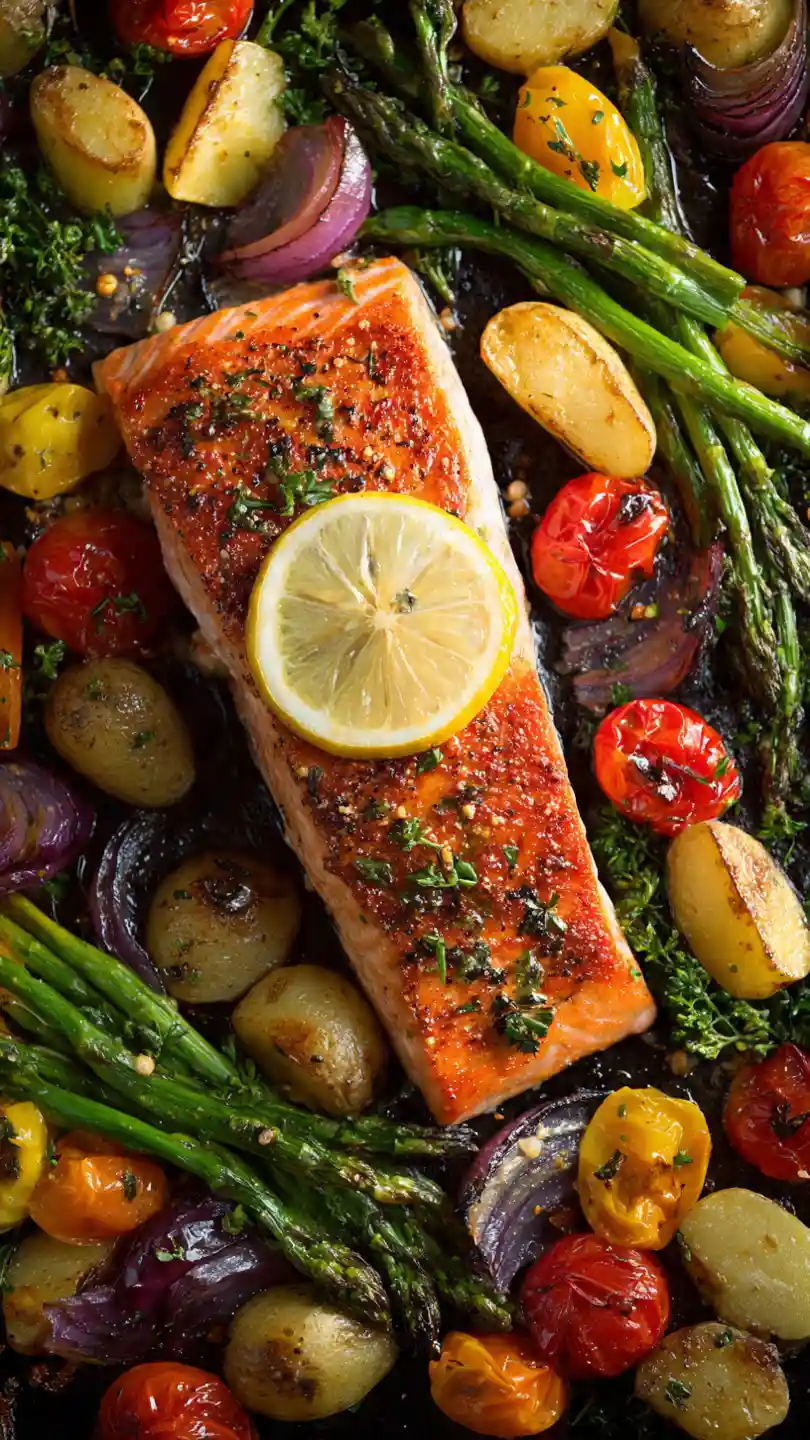
Sheet pan salmon and vegetables is one of the easiest ways to make a complete dinner without using several pans. The salmon roasts until tender and flaky, while the vegetables soften, caramelize around the edges, and pick up flavor from olive oil, garlic, lemon, and seasoning.
This recipe is perfect for busy weeknights, lighter dinners, meal prep, and anyone who wants a simple seafood meal that does not feel complicated. You can serve it as-is, with rice, quinoa, cauliflower rice, or a simple salad.
The key is choosing vegetables that cook in the same time as the salmon or giving firmer vegetables a head start. Salmon cooks quickly, so potatoes and carrots need to be cut small or roasted first. That keeps the fish moist instead of overbaked.
What This Recipe Tastes Like
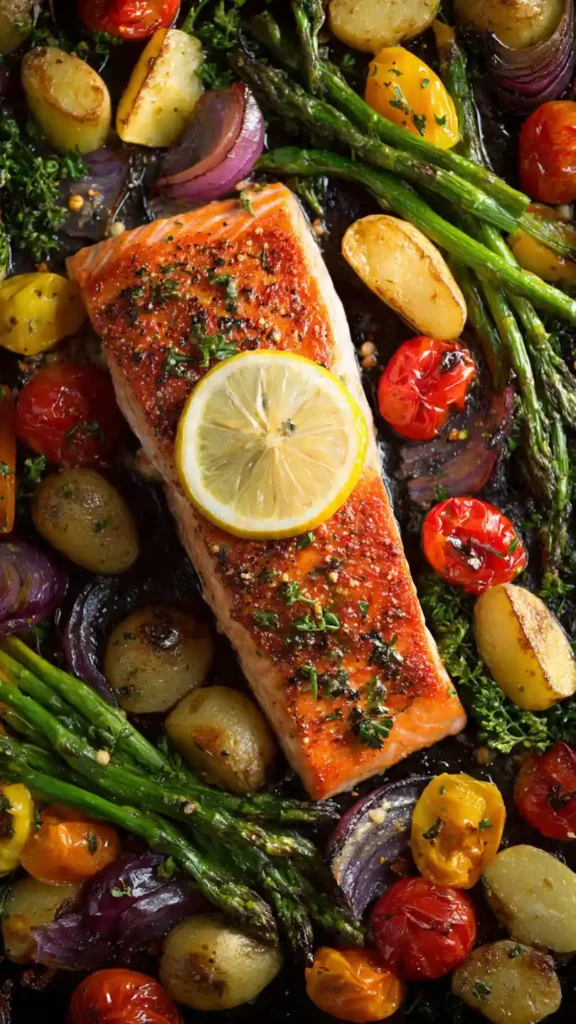
This sheet pan salmon and vegetables recipe tastes fresh, savory, lightly garlicky, and bright from the lemon. The salmon is rich and tender with a flaky texture, while the vegetables add sweetness, color, and roasted flavor.
The lemon does not overpower the fish. It lifts the flavor at the end and balances the natural richness of salmon. Garlic, paprika, black pepper, and herbs give the dish a simple savory base without making it heavy.
On the plate, you get flaky salmon, roasted vegetables, and a clean lemon-herb finish. It feels healthy and satisfying without needing a creamy sauce or complicated marinade.
Why You’ll Love This Recipe
- Complete dinner on one pan with salmon and vegetables together.
- Fast enough for weeknights because salmon cooks quickly.
- Easy cleanup with a lined sheet pan.
- Fresh, balanced flavor from lemon, garlic, herbs, and olive oil.
- Beginner-friendly with clear doneness cues.
- Flexible vegetables based on what you already have.
- Great for meal prep when reheated gently or served cold over salads.
Best Occasions to Serve This
This recipe is best for weeknight dinners when you want something fresh but still filling. It is also a good option for meal prep because roasted salmon and vegetables can be portioned into containers with rice, quinoa, or greens.
Serve it for a simple family dinner, a light weekend meal, or a casual dinner when you want seafood without much hands-on work. It also works well when you want something nice enough for guests but easy enough to prepare without stress.
For a lighter plate, serve it with extra vegetables or salad. For a heartier dinner, add roasted potatoes, rice, couscous, or warm bread.
Kitchen Equipment You’ll Need
Large rimmed sheet pan – Keeps the salmon juices, oil, and vegetables contained while roasting.
Parchment paper or foil – Makes cleanup easier and helps prevent sticking.
Sharp knife – Needed for cutting vegetables evenly.
Cutting board – Gives you space to prep vegetables, lemon, and herbs.
Small bowl – Useful for mixing the oil, lemon, garlic, and seasoning.
Tongs or spatula – Helps move vegetables and lift salmon gently.
Instant-read thermometer – The best way to check salmon doneness without guessing.
Ingredient Notes Before You Cook
Salmon fillets work best when they are similar in thickness. If one piece is much thinner than the others, it may cook faster and turn dry. Center-cut fillets are usually easiest to cook evenly.
Skin-on or skinless salmon can be used. Skin-on fillets are a little more forgiving because the skin helps protect the bottom of the fish as it roasts. If using skin-on salmon, place it skin-side down on the pan.
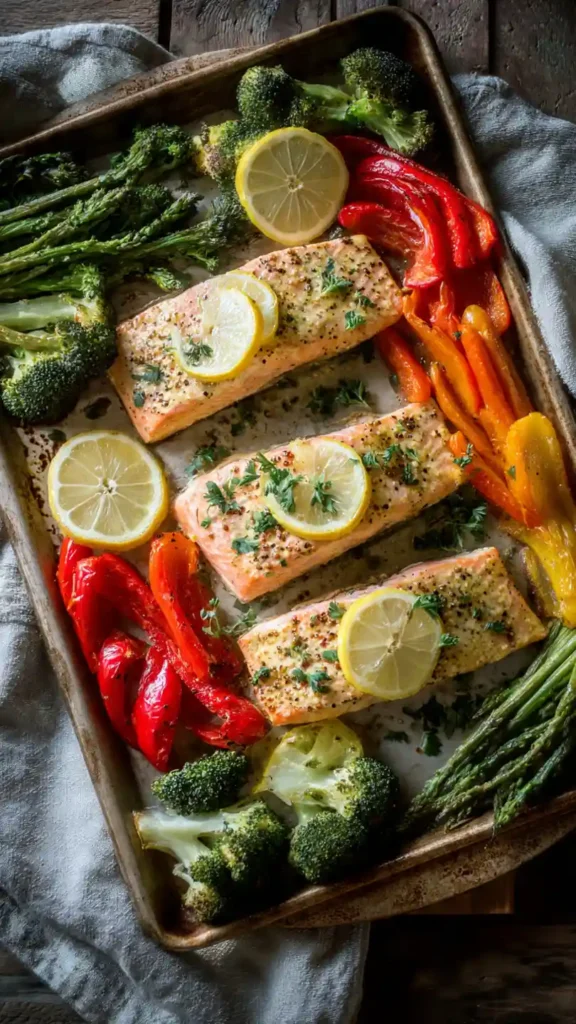
Broccoli, zucchini, bell peppers, asparagus, green beans, cherry tomatoes, red onion, and carrots all work well. The trick is matching the vegetable size to the cooking time. Dense vegetables need to be smaller or roasted first, while soft vegetables cook quickly.
Olive oil helps the salmon stay moist and helps the vegetables roast instead of drying out. Do not skip it completely, or the vegetables may turn dry and tough.
Fresh lemon juice and zest give the best flavor. Add some lemon before baking, then finish with a little more after baking for a brighter taste.
Garlic should be minced finely so it spreads evenly. If you use large pieces of garlic, they may burn on the hot sheet pan.
Step-by-Step Cooking Instructions
1. Preheat the oven
Preheat the oven to 400°F. This temperature is hot enough to roast the vegetables but gentle enough to keep the salmon tender.
Line a large rimmed sheet pan with parchment paper or foil for easier cleanup.
2. Prep the vegetables
Cut the vegetables into pieces that will cook evenly. Dense vegetables like carrots should be sliced thin. Softer vegetables like zucchini should be cut thicker so they do not collapse.
If using potatoes, cut them small and roast them for 15 minutes before adding the salmon. Salmon cooks too quickly to wait for large potatoes to soften.
3. Season the vegetables
Place the vegetables on the sheet pan. Toss them with olive oil, garlic, salt, pepper, paprika, and Italian seasoning.
Spread them out in a single layer. If vegetables are piled up, they will steam instead of roast.
4. Start roasting firmer vegetables
If your vegetables are firm, such as carrots, potatoes, or thick broccoli, roast them for 10 to 15 minutes before adding the salmon.
This head start helps everything finish together. If you are using quick-cooking vegetables like asparagus, zucchini, or cherry tomatoes, you can add the salmon right away.
5. Prepare the salmon
Pat the salmon dry with paper towels. Drying helps the seasoning stick and prevents extra moisture from pooling on the pan.
Rub the salmon with olive oil, lemon zest, lemon juice, garlic, salt, pepper, and herbs. Keep the seasoning simple so the flavor of the salmon comes through.
6. Add salmon to the sheet pan
Make space between the vegetables and place the salmon fillets on the pan. If using skin-on salmon, place the fillets skin-side down.
Do not bury the salmon under vegetables. It should sit exposed so it roasts evenly.
7. Roast until tender and flaky
Bake until the salmon is cooked through and flakes easily with a fork. Depending on thickness, this usually takes about 10 to 14 minutes after the salmon is added to the pan.
For food safety, cook fish to 145°F or until the flesh is opaque and separates easily with a fork. Use a thermometer in the thickest part for the most accurate check.
8. Finish with lemon and herbs
Remove the pan from the oven and squeeze fresh lemon juice over the salmon and vegetables. Add chopped parsley, dill, or green onions if you like.
Let the salmon rest for a minute or two before serving. This helps the fish stay moist when lifted from the pan.
Pro Tips for Best Results
- Use similar-sized salmon fillets. Even thickness helps all pieces finish at the same time.
- Give firm vegetables a head start. Potatoes, carrots, and thick broccoli need more time than salmon.
- Do not overbake the salmon. Salmon can dry out quickly once it passes the ideal doneness point.
- Pat salmon dry before seasoning. This helps the oil and seasoning stay on the fish.
- Use parchment for easier cleanup. Salmon skin and roasted vegetables can stick to the pan.
- Keep garlic pieces small. Large garlic pieces can burn during roasting.
- Finish with fresh lemon. Lemon added after baking tastes brighter than lemon cooked the whole time.
- Serve soon after baking. Salmon has the best texture when freshly roasted.
Common Mistakes to Avoid
Cooking all vegetables for the same amount of time
Different vegetables cook at different speeds. Dense vegetables need a head start, while soft vegetables may only need the same short cooking time as salmon.
Overcrowding the pan
If the pan is too full, vegetables steam instead of roast. Use two sheet pans if needed.
Using very thin salmon fillets
Thin fillets can overcook before the vegetables are done. If your salmon is thin, use quick-cooking vegetables and check early.
Adding too much lemon before baking
Too much lemon juice before baking can make the salmon taste sharp. Use some before baking, then finish with fresh lemon after cooking.
Skipping the thermometer
Visual cues help, but a thermometer gives the most reliable result. Check the thickest part of the salmon.
Reheating too aggressively
Salmon can become dry when reheated at high heat. Warm leftovers gently with a little moisture.
Variations & Substitutions
Sheet Pan Salmon with Asparagus
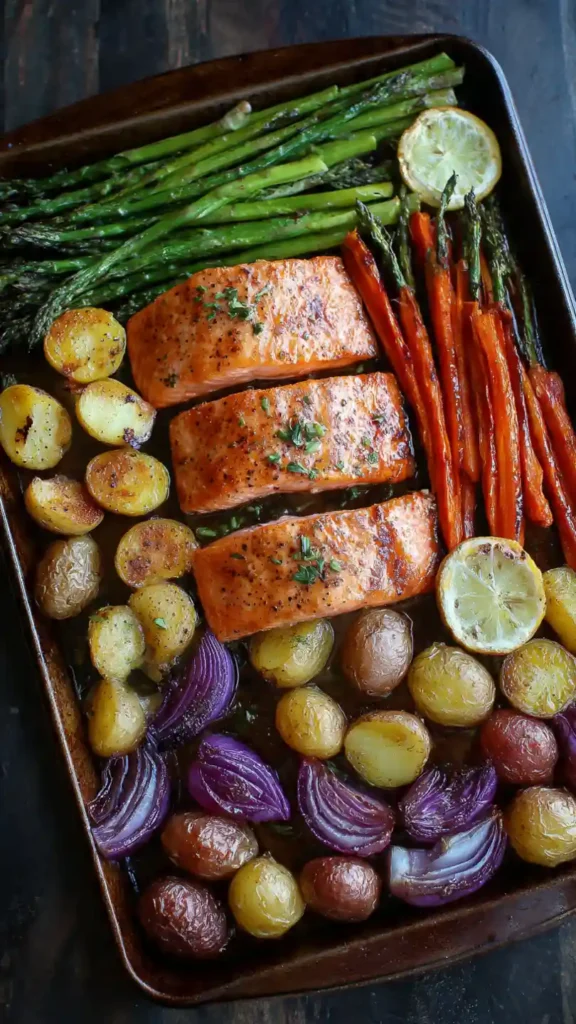
Use asparagus, cherry tomatoes, and red onion for a quick-cooking vegetable mix. This version usually does not need a long vegetable head start.
Salmon with Potatoes and Green Beans
Roast small potatoes first, then add salmon and green beans. This gives you a heartier dinner while keeping the salmon tender.
Honey Garlic Salmon Sheet Pan Dinner
Add a small amount of honey to the seasoning mixture for a sweet-savory glaze. Watch closely because honey can brown quickly.
Spicy Salmon and Vegetables
Add red pepper flakes, cayenne, chili powder, or a little sriracha to the oil mixture for heat.
Mediterranean Salmon
Use oregano, lemon, garlic, cherry tomatoes, zucchini, red onion, and olives. Add feta after baking if desired.
Low-Carb Version
Skip potatoes and use broccoli, cauliflower, zucchini, asparagus, bell peppers, mushrooms, or green beans.
Dairy-Free Version
This recipe is naturally dairy-free as written if you do not add cheese or creamy toppings.
Frozen Salmon Option
Frozen salmon can work if thawed completely first. Pat it dry very well before seasoning so the texture does not turn watery.
What to Serve With This Recipe
Steamed rice – A simple base that pairs well with lemon and garlic.
Quinoa – Adds a nutty flavor and works well for meal prep.
Cauliflower rice – A lighter low-carb option.
Couscous – Quick, fluffy, and good with lemon-herb flavors.
Garlic bread – Good if you want a heartier dinner.
Cucumber tomato salad – Fresh and crisp next to roasted salmon.
Greek yogurt dill sauce – Cool, creamy, and bright with salmon.
Avocado slices – Add richness and pair well with lemon.
Storage, Freezing & Reheating Tips
Store leftover salmon and vegetables in an airtight container in the refrigerator for up to 3 days. Let everything cool before storing, but do not leave cooked seafood out at room temperature for too long.
For meal prep, portion the salmon and vegetables with rice, quinoa, or salad greens. If using salad greens, store them separately so they do not wilt.
Freezing cooked salmon is possible, but the texture may become drier after thawing. Freeze in airtight containers for up to 2 months. Vegetables like zucchini and tomatoes may soften after freezing.
Reheat gently in a 300°F oven until warmed through. You can also reheat in a skillet over low heat with a small splash of water or broth. Avoid high heat because salmon dries out quickly.
Microwaving works in a hurry, but use low power and short intervals. Stop as soon as the salmon is warm.
Make-Ahead Tips
You can chop the vegetables up to 2 days ahead and store them in airtight containers in the refrigerator.
You can mix the oil, lemon zest, garlic, and seasoning a few hours ahead. Add lemon juice closer to cooking for the freshest flavor.
Salmon can be seasoned shortly before baking. Avoid marinating salmon too long in lemon juice because acid can change the texture of the fish.
If meal prepping, bake the salmon and vegetables fully, cool them, and store in individual containers. For best texture, reheat gently or serve the salmon cold over salad.
FAQs
Can I use frozen salmon for sheet pan salmon and vegetables?
Yes, frozen salmon works if it is thawed completely first. Pat it dry very well before seasoning so it roasts properly instead of releasing too much moisture onto the pan.
What vegetables cook best with salmon on a sheet pan?
Asparagus, broccoli, zucchini, bell peppers, green beans, cherry tomatoes, red onion, and cauliflower all work well. Potatoes and carrots also work, but they need to be cut small or roasted before adding the salmon.
How do I know when salmon is done?
Salmon is done when it is opaque, flakes easily with a fork, and reaches 145°F in the thickest part for food safety. A thermometer is the most reliable way to check without overcooking.
How do I keep salmon from drying out in the oven?
Use evenly sized fillets, avoid overbaking, and check the salmon early. Adding olive oil and baking at a moderate-high temperature also helps keep the fish moist.
Is sheet pan salmon good for meal prep?
Yes, sheet pan salmon works for short-term meal prep. Store it in the refrigerator for up to 3 days and reheat gently, or serve it cold over salads or grain bowls.
More Recipes You’ll Love
Sheet Pan Salmon & Vegetables
Ingredients
Method
- Preheat the oven to 400°F. Line a large rimmed sheet pan with parchment paper or foil.
- Add broccoli, bell peppers, zucchini, and red onion to the sheet pan.
- Drizzle vegetables with 2 tablespoons olive oil. Season with 1/2 teaspoon salt, 1/4 teaspoon black pepper, garlic powder, paprika, and Italian seasoning. Toss well.
- Spread vegetables in a single layer and roast for 8 minutes.
- Pat salmon fillets dry with paper towels.
- Rub salmon with remaining 1 tablespoon olive oil, remaining 1/2 teaspoon salt, remaining 1/4 teaspoon black pepper, minced garlic, lemon zest, and 1 tablespoon lemon juice.
- Remove the sheet pan from the oven and make space for the salmon.
- Place salmon fillets on the pan, skin-side down if using skin-on salmon.
- Return to the oven and bake for 10 to 14 minutes, or until salmon reaches 145°F in the thickest part and flakes easily with a fork.
- Drizzle with remaining 1 tablespoon lemon juice.
- Garnish with parsley or dill and serve warm with lemon wedges.
Notes
- Use salmon fillets that are similar in thickness so they cook evenly.
- If using potatoes or carrots, roast them for 15 minutes before adding salmon.
- Do not overbake salmon; check early if fillets are thin.
- Frozen salmon should be fully thawed and patted dry before baking.
- Store leftovers in the refrigerator for up to 3 days.
Protein: 36g
Fat: 23g
Carbs: 11g