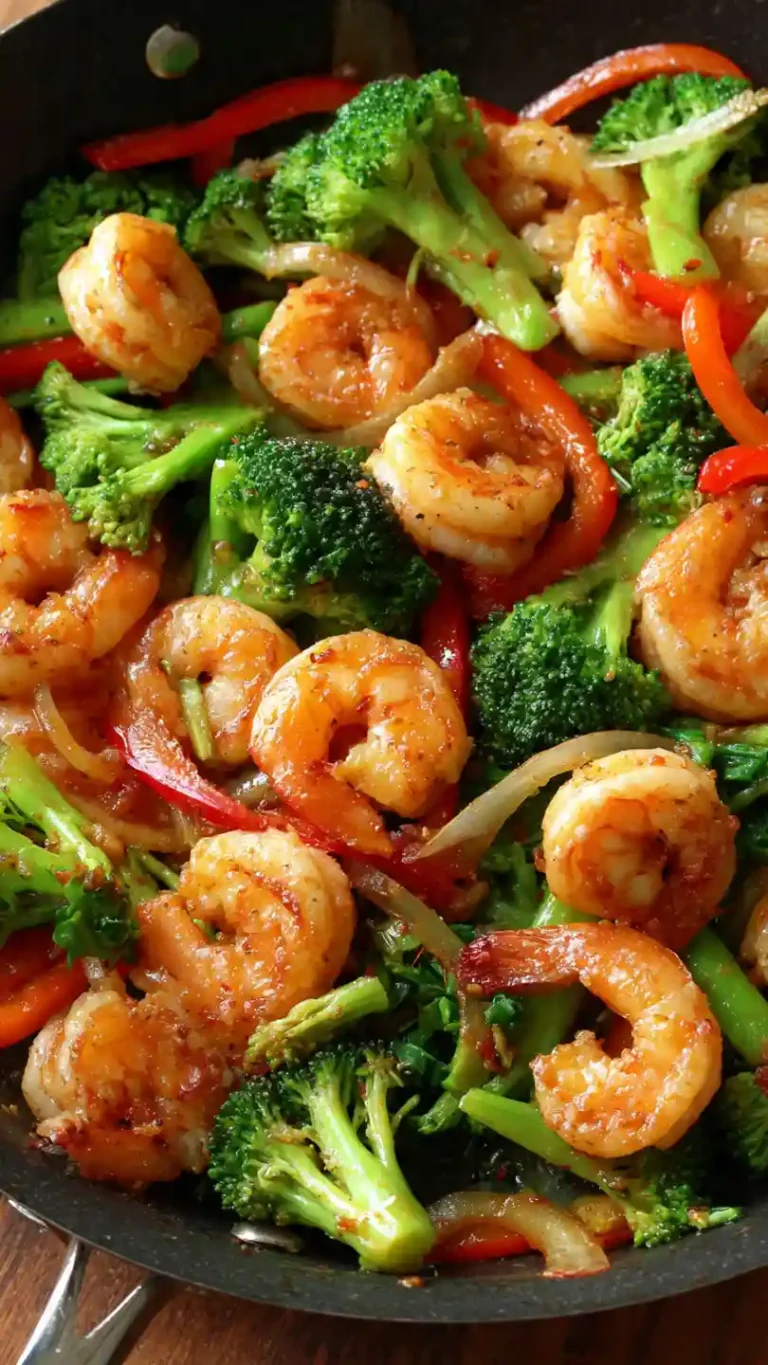
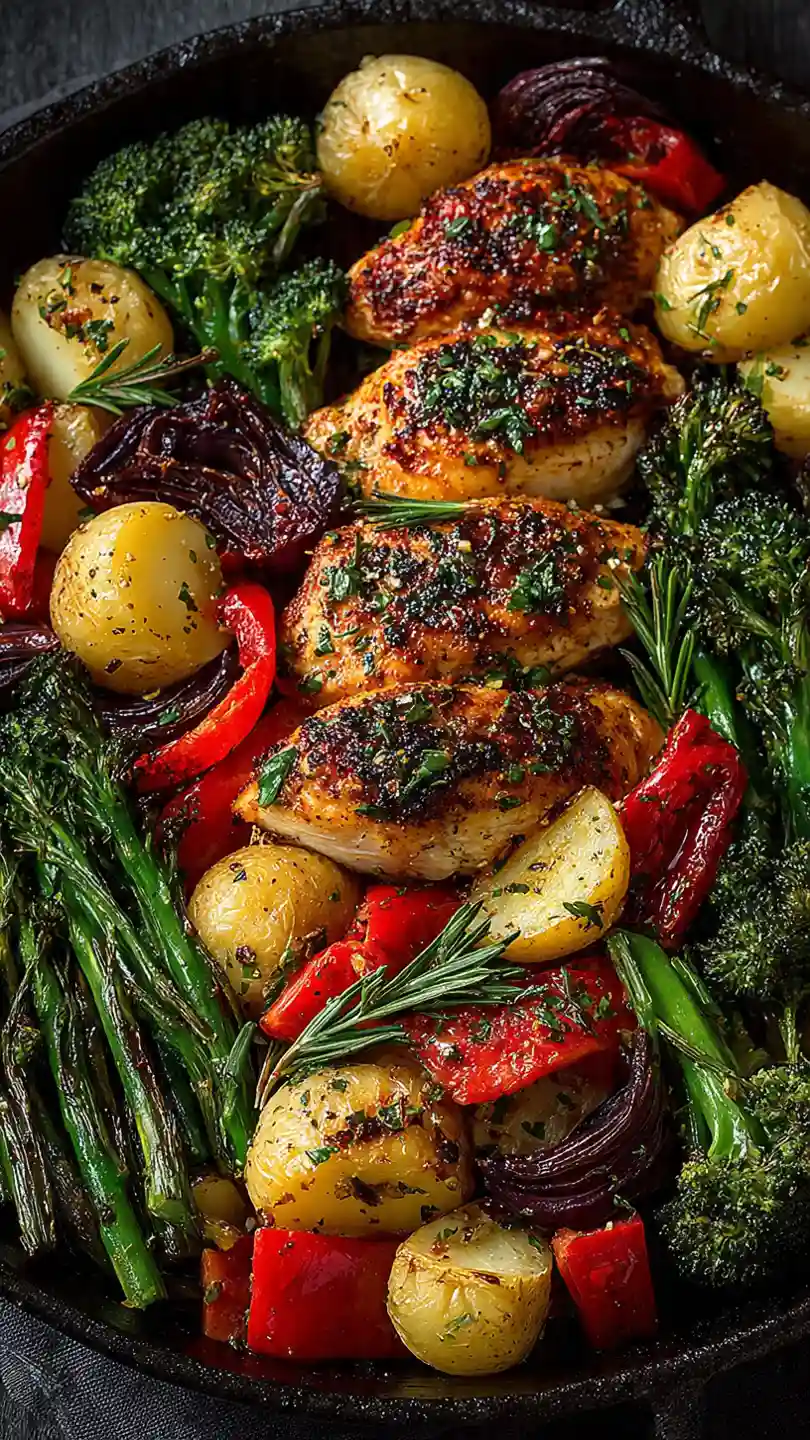
One Pan Chicken & Vegetables

One-pan chicken and vegetables is the kind of dinner that solves the “what should I cook tonight?” problem without making a mess in the kitchen. The chicken roasts on the same pan as the vegetables, so you get a full meal with tender meat, caramelized edges, and very little cleanup.
This version is practical for busy families, beginner cooks, and anyone who wants a balanced dinner without juggling several pots. The chicken is seasoned well, the vegetables are cut to cook at the same pace, and everything finishes together in the oven.
The method works because the pan is hot, the vegetables are spread out, and the chicken is cooked until it reaches a safe internal temperature. That keeps the chicken juicy while giving the vegetables enough time to roast instead of steam.
What This Recipe Tastes Like
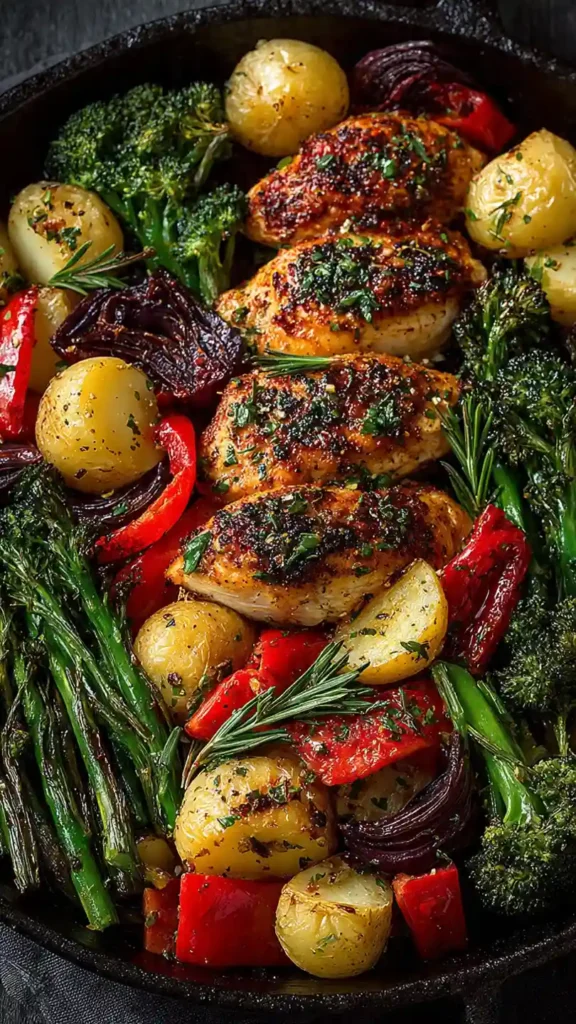
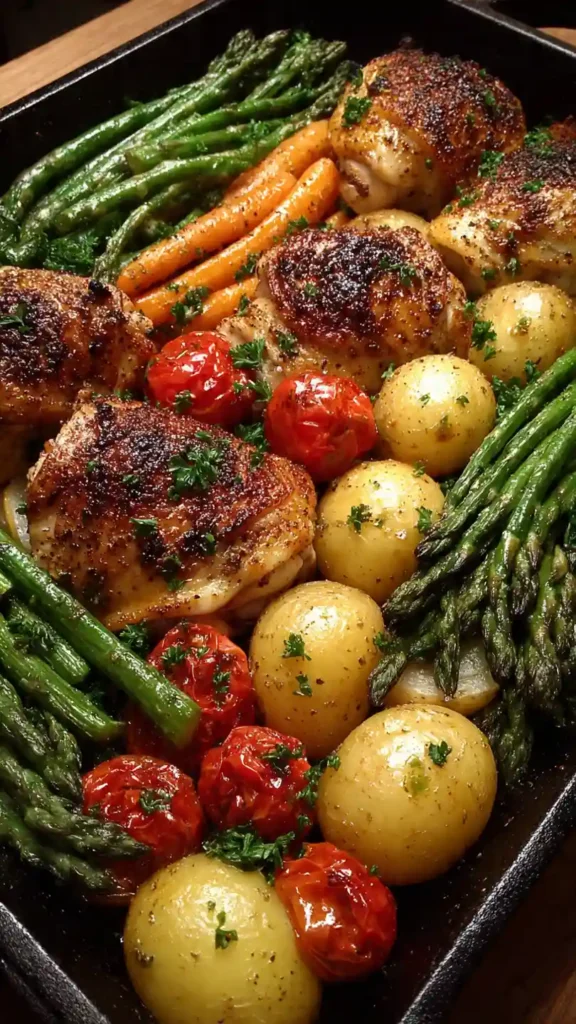
This one-pan chicken and vegetables recipe tastes savory, lightly garlicky, and comforting without being heavy. The chicken is juicy in the center with seasoned edges, while the vegetables become tender with golden roasted spots.
The carrots turn slightly sweet, the broccoli gets crisp edges, the potatoes become soft inside, and the onions add a gentle savory flavor to the whole pan. A little lemon at the end brightens everything and keeps the dish from tasting flat.
On the plate, it feels like a complete homemade dinner: simple, colorful, and satisfying. It is not saucy, but the juices from the chicken and vegetables create enough flavor on the sheet pan to make every bite taste seasoned.
Why You’ll Love This Recipe
- Everything cooks on one pan for easy cleanup.
- Beginner-friendly with simple steps and clear doneness cues.
- Family-friendly because the flavors are familiar and not too spicy.
- Great for meal prep since the chicken and vegetables reheat well.
- Flexible vegetables based on what you already have.
- No complicated sauce or hard-to-find ingredients.
- Works for busy weeknights because most of the cooking happens in the oven.
Best Occasions to Serve This
This recipe is best for weeknight dinners when you want something homemade but not complicated. It is also a good meal prep recipe because you can portion the chicken and vegetables into containers for lunches.
Serve it for family dinners with a simple side salad or warm bread. It also works when you want a lighter dinner after a busy day but still need something filling.
If you are cooking for different diets, this recipe is easy to adjust. Serve it as written with potatoes, swap in lower-carb vegetables, or pair it with rice, quinoa, or cauliflower rice depending on what your family prefers.
Kitchen Equipment You’ll Need
Large rimmed sheet pan – A rimmed pan keeps the chicken juices and vegetables contained while roasting.
Parchment paper or foil – Makes cleanup easier and helps prevent sticking.
Sharp knife – Helps cut vegetables evenly so they cook at the same speed.
Cutting board – Needed for trimming chicken and prepping vegetables.
Large mixing bowl – Useful for tossing the vegetables with oil and seasoning.
Tongs – Helpful for turning the chicken and moving vegetables around the pan.
Instant-read thermometer – The safest way to check that the chicken is fully cooked.
Ingredient Notes Before You Cook
Boneless, skinless chicken thighs are a great choice because they stay juicy and are more forgiving than chicken breast. Chicken breast also works, but it can dry out faster if overcooked. If using chicken breast, choose pieces that are similar in size or cut very large pieces in half.
Potatoes should be cut small enough to cook through at the same time as the chicken. Baby potatoes, Yukon gold potatoes, or red potatoes work well because they roast nicely and hold their shape.
Broccoli should be cut into medium florets. If the florets are too small, they may burn before the chicken is done. If they are too large, they may stay tough.
Carrots add sweetness and color. Slice them thin enough so they become tender in the oven. Thick chunks take longer to cook.
Olive oil helps the seasoning stick and helps the vegetables roast instead of drying out. Do not use too little oil, or the vegetables may look dry before they become tender.
Lemon juice is best added after baking. It gives the finished dish a fresh flavor without making the vegetables watery during roasting.
Step-by-Step Cooking Instructions
1. Preheat the oven
Preheat the oven to 425°F. A hot oven helps the vegetables roast with golden edges instead of slowly steaming.
Line a large rimmed sheet pan with parchment paper or foil if you want easier cleanup.
2. Prep the vegetables
Cut the vegetables into pieces that will cook evenly. Potatoes should be smaller than the broccoli because they take longer to soften.
Try to keep similar vegetables the same size. Even cuts help everything finish at the same time and prevent some pieces from burning while others stay firm.
3. Season the vegetables
Add the vegetables to a large bowl and toss them with oil and seasoning. Make sure they are lightly coated but not swimming in oil.
Spread the vegetables on the sheet pan in an even layer. If they are piled on top of each other, they will steam instead of roast.
4. Season the chicken
Pat the chicken dry with paper towels, then season it well on both sides. Dry chicken browns better and holds seasoning more evenly.
Place the chicken pieces among the vegetables, leaving a little space around each piece. The chicken should not be buried under the vegetables.
5. Roast the first side
Place the pan in the oven and roast until the vegetables start to soften and the chicken begins cooking through. You should see some browning around the edges of the potatoes and onions.
Avoid opening the oven too often. Heat loss can slow down roasting and make the vegetables less golden.
6. Stir the vegetables
About halfway through cooking, carefully stir the vegetables around the chicken. This helps them brown more evenly.
If the broccoli looks like it is browning too quickly, move it closer to the center of the pan or tuck it near the chicken where there is more moisture.
7. Check the chicken temperature
Continue roasting until the chicken reaches 165°F in the thickest part. Use an instant-read thermometer for the most accurate result.
Do not rely only on color. Chicken can look done before it is safe, especially if the pieces are thick.
8. Add lemon and rest
Remove the pan from the oven and squeeze fresh lemon juice over the chicken and vegetables. Let everything rest for about 5 minutes before serving.
The rest time helps the chicken stay juicy and lets the flavors settle before you plate the meal.
Pro Tips for Best Results
- Use a large enough pan. Crowding causes steaming, which makes vegetables soft instead of roasted.
- Cut potatoes small. Potatoes take longer than most vegetables, so smaller pieces help them finish on time.
- Pat the chicken dry. Dry chicken browns better and tastes more seasoned.
- Place chicken on top or between vegetables. Do not bury chicken under vegetables, or it may cook unevenly.
- Add quick-cooking vegetables later if needed. Zucchini, asparagus, or green beans may need less time than potatoes and carrots.
- Use a thermometer. It keeps the chicken safe without overcooking it.
- Finish with lemon, not before baking. Lemon tastes fresher when added at the end.
- Let the chicken rest. Cutting immediately can make the juices run out.
Common Mistakes to Avoid
Overcrowding the sheet pan
When vegetables are too close together, they steam instead of roast. Use two pans if needed. Better spacing gives you better color and texture.
Cutting vegetables too large
Large potato or carrot pieces may still be firm when the chicken is done. Cut dense vegetables smaller so everything cooks evenly.
Using chicken pieces with very different sizes
Small pieces cook faster than large pieces. Try to use similar-sized chicken thighs or breasts so one piece does not dry out while another is still undercooked.
Adding delicate vegetables too early
Zucchini, asparagus, and green beans cook faster than potatoes and carrots. Add them halfway through if you want them tender but not mushy.
Skipping the thermometer
Guessing can lead to dry chicken or undercooked chicken. Check the thickest part and make sure it reaches 165°F.
Using too little seasoning
Chicken and vegetables both need seasoning. If you only season the top lightly, the dish can taste bland even if it looks good.
Variations & Substitutions
Chicken Breast Version
Use boneless, skinless chicken breasts and choose pieces that are similar in thickness. If they are very large, cut them in half horizontally or pound them slightly so they cook evenly.
Chicken Thigh Version
Boneless chicken thighs are juicy and flavorful. They are a good option if you want a more forgiving cut that stays tender after roasting.
Low-Carb Version
Skip the potatoes and use cauliflower florets, zucchini, bell peppers, mushrooms, green beans, or broccoli. Watch softer vegetables because they may cook faster.
Gluten-Free Version
This recipe is naturally gluten-free if your seasoning blend is gluten-free. Always check labels if using packaged seasoning.
Dairy-Free Version
The recipe is dairy-free as written if you use olive oil and do not add cheese.
Spicy Version
Add crushed red pepper flakes, cayenne pepper, or chili powder to the seasoning for more heat.
Herb Variation
Use Italian seasoning, thyme, rosemary, oregano, parsley, or a mix. Rosemary is strong, so use a smaller amount if you do not want it to dominate.
What to Serve With This Recipe
Simple green salad – Adds freshness and crunch next to the roasted chicken and vegetables.
Garlic rice – Good for a heartier family-style dinner.
Cauliflower rice – A lower-carb side that still makes the meal feel complete.
Warm dinner rolls – Helpful if you want to stretch the meal for a family.
Greek yogurt sauce – Adds a cool, creamy contrast to the roasted flavors.
Avocado slices – Add richness and work well with lemon and garlic.
Quinoa – A simple meal prep base that pairs well with chicken and vegetables.
Cucumber tomato salad – Fresh, quick, and bright enough to balance the roasted pan flavors.
Storage, Freezing & Reheating Tips
Store leftovers in an airtight container in the refrigerator for up to 3 to 4 days. Let the chicken and vegetables cool before storing, but do not leave them sitting out for too long.
For meal prep, divide the chicken and vegetables into individual containers. If adding rice, quinoa, or cauliflower rice, store it in the same container or separately depending on your preference.
Freezing works best for the chicken and sturdier vegetables like potatoes and carrots. Broccoli may soften after thawing. Freeze in airtight containers for up to 2 months.
Reheat leftovers in a 325°F oven until warmed through. You can also reheat in a skillet with a small splash of broth or water. Microwave reheating works, but use short intervals so the chicken does not become rubbery.
Avoid reheating too many times. Reheat only the portion you plan to eat.
Make-Ahead Tips
You can chop the vegetables up to 2 days ahead and store them in the refrigerator. Keep potatoes covered in cold water if prepping them ahead, then drain and dry them well before roasting.
You can mix the seasoning ahead and store it in a small jar. This saves time on busy nights.
The chicken can be seasoned a few hours ahead and kept covered in the refrigerator. Do not partially cook the chicken ahead. If you start cooking it, finish cooking it fully before storing.
For faster dinner prep, portion the vegetables and seasoning separately so you only need to toss, arrange, and bake.
FAQs
Can I use chicken breast for one-pan chicken and vegetables?
Yes, chicken breast works well, but it can dry out faster than chicken thighs. Use similar-sized pieces and check the internal temperature early. Once the thickest part reaches 165°F, remove the pan from the oven and let the chicken rest.
What vegetables cook best with chicken on one pan?
Potatoes, carrots, broccoli, onions, bell peppers, cauliflower, and Brussels sprouts work well. Dense vegetables should be cut smaller, while softer vegetables should be added later if they cook too quickly.
How do I keep one-pan chicken and vegetables from getting soggy?
Use a hot oven, spread everything in a single layer, and avoid overcrowding the pan. Too much food packed together releases steam, which prevents browning.
Can I make one-pan chicken and vegetables ahead of time?
Yes, you can cook it ahead and store it in the refrigerator for 3 to 4 days. Reheat gently in the oven, skillet, or microwave. For best flavor, add a fresh squeeze of lemon after reheating.
Is one-pan chicken and vegetables good for meal prep?
Yes, it is a strong meal prep recipe because the chicken and vegetables store well together. Portion them into containers with rice, quinoa, cauliflower rice, or salad greens for easy lunches or dinners.
More Recipes You’ll Love
One-Pan Chicken & Vegetables
Ingredients
Method
- Preheat oven to 400°F (200°C). Line a baking sheet with parchment paper.
- Cut chicken and vegetables into evenly sized pieces.
- Place everything on the sheet pan.
- Drizzle with olive oil and sprinkle with seasoning, salt, and pepper.
- Toss to coat and spread into an even layer.
- Bake for 30 minutes, stirring halfway through.
- Remove from oven and serve warm.
Notes
- Chicken thighs can be used instead of breasts
- Don’t overcrowd the pan for best roasting
- Add potatoes for a heartier meal