Chicken Fajita Skillet

This chicken fajita skillet gives you the flavor of sizzling fajitas without needing a restaurant-style grill or a stack of pans. The chicken cooks quickly in a hot skillet, then the peppers and onions soften just enough to stay colorful, sweet, and slightly crisp around the edges.
It is a smart dinner for busy nights because the whole meal comes together in one pan. You can serve it with warm tortillas, rice, lettuce cups, cauliflower rice, or a simple salad, so it works for different appetites at the same table.
The key to making this recipe taste good is cooking in stages. The chicken needs enough space to brown instead of steam, and the vegetables should cook after the chicken so they pick up the seasoning and browned bits from the pan.
What This Recipe Tastes Like
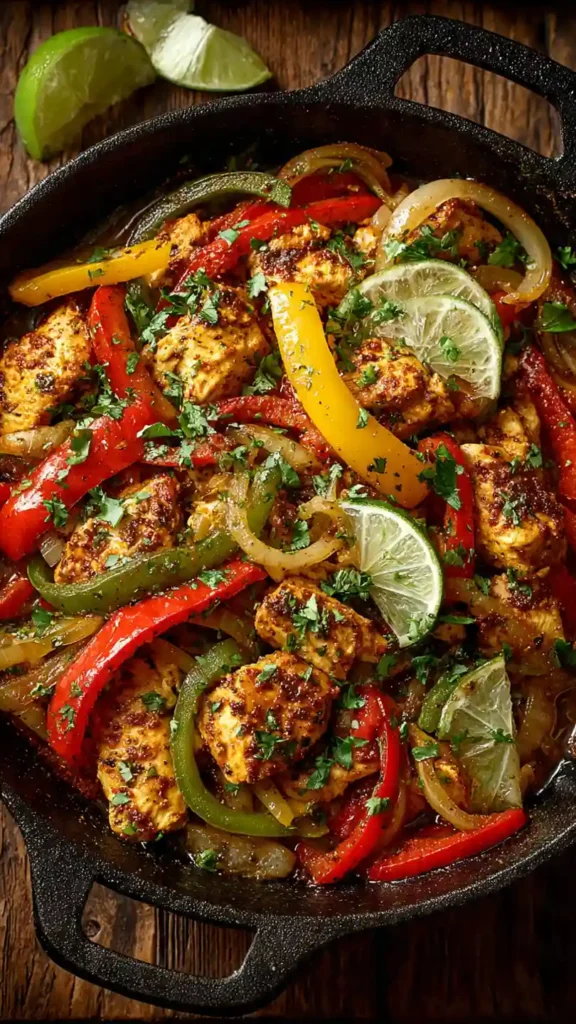
Chicken fajita skillet tastes smoky, savory, lightly spicy, and bright from the lime added at the end. The chicken is tender with a seasoned crust from the hot skillet, while the peppers and onions bring sweetness and a little crunch.
The texture is part of what makes this recipe satisfying. You get juicy chicken strips, soft onions, and peppers that still have some bite instead of turning mushy. The seasoning coats everything without becoming heavy or saucy.
On the plate, it feels fresh but filling. The lime juice wakes up the spices, the vegetables add color, and the chicken makes it a complete dinner that can be served several different ways.
Why You’ll Love This Recipe
- One skillet dinner with less cleanup.
- Fast enough for weeknights and ready in about 30 minutes.
- Family-friendly because everyone can build their own plate.
- Great for meal prep with rice, salad, or low-carb sides.
- Flexible serving options including tortillas, bowls, lettuce wraps, or cauliflower rice.
- Beginner-friendly method with simple steps and clear doneness cues.
- Big flavor without a complicated sauce because the seasoning and skillet browning do most of the work.
Best Occasions to Serve This
This chicken fajita skillet is ideal for weeknight dinners when you want something quick but still colorful and satisfying. It is also great for casual family meals because the toppings and sides can be set out separately.
It works well for meal prep because the chicken and vegetables can be divided into containers with rice, beans, salad greens, or cauliflower rice. You can also serve it for game day or a casual dinner with tortillas, salsa, guacamole, and shredded cheese on the side.
If you need a lighter meal, serve it over lettuce or with a simple cucumber salad. If you want something heartier, serve it with warm tortillas and rice.
Kitchen Equipment You’ll Need
Large skillet – A wide skillet gives the chicken and vegetables room to brown instead of steam.
Tongs or spatula – Helpful for turning chicken strips and tossing the vegetables evenly.
Cutting board – Needed for slicing chicken, peppers, onions, and lime.
Sharp knife – Makes it easier to cut even strips so everything cooks at the same pace.
Small bowl – Useful for mixing the seasoning before adding it to the chicken.
Instant-read thermometer – The safest way to confirm the chicken is cooked through.
Ingredient Notes Before You Cook
Chicken breast works well for this skillet because it cooks quickly when sliced thin. The main thing is to cut the chicken into even strips so some pieces do not dry out while others are still undercooked. Chicken thighs can also be used if you prefer a juicier, richer result.
Bell peppers give fajitas their classic color and sweetness. A mix of red, yellow, orange, or green peppers makes the skillet look better and adds more flavor. Green peppers taste slightly sharper, while red and yellow peppers are sweeter.
Onion adds sweetness and depth once it softens in the hot pan. Yellow onion is a good all-purpose choice, but red onion also works if you like a stronger flavor.
Fajita seasoning should taste smoky, savory, and balanced. Chili powder, cumin, paprika, garlic powder, onion powder, salt, and pepper create a simple homemade blend. If using store-bought seasoning, check the salt level before adding extra salt.
Fresh lime juice is best added at the end. If it cooks too long, the flavor can become dull. A squeeze of lime after cooking makes the chicken and vegetables taste brighter.
Step-by-Step Cooking Instructions
1. Slice the chicken and vegetables evenly
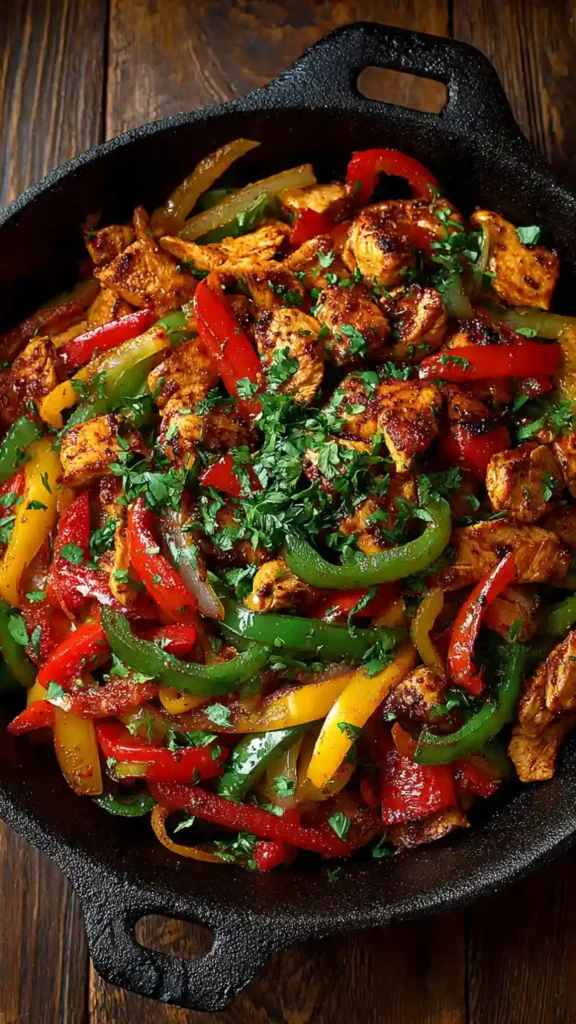
Cut the chicken into thin strips, about the same thickness. Even pieces cook more evenly and are less likely to turn dry.
Slice the bell peppers and onion into strips as well. Keep the vegetables similar in size so they soften at the same pace.
2. Season the chicken
Add the chicken to a bowl and coat it with the fajita seasoning. Toss until each piece is lightly covered.
Do not add lime juice too early as a long marinade for thin chicken strips. Acid can change the texture if it sits too long. For this skillet, lime works best as a finishing flavor.
3. Heat the skillet
Place a large skillet over medium-high heat and let it get hot before adding the chicken. A hot pan helps the chicken brown instead of releasing too much liquid.
Add a little oil and swirl it across the bottom of the pan. The oil should shimmer, but it should not smoke heavily.
4. Cook the chicken in a single layer
Add the chicken strips to the skillet in a single layer. If your skillet is small, cook the chicken in batches.
Let the chicken cook without constant stirring for the first couple of minutes. This helps it develop browned edges and better flavor.
5. Cook until the chicken is done
Turn the chicken and continue cooking until the strips are no longer pink in the center and the thickest pieces reach 165°F. This usually takes about 5 to 7 minutes, depending on thickness.
Transfer the cooked chicken to a plate. Do not leave it in the skillet while the vegetables cook, or it may overcook and become dry.
6. Cook the peppers and onions
Add the peppers and onions to the same skillet. If the pan looks dry, add a small splash of oil.
Cook for about 5 to 7 minutes, stirring occasionally. The vegetables should soften but still have some texture. Look for browned edges and a sweet aroma from the onions.
7. Return the chicken to the skillet
Add the chicken back to the skillet with the vegetables. Toss everything together so the chicken picks up the flavor from the peppers, onions, and pan juices.
If the skillet seems dry, add one or two tablespoons of water or chicken broth to loosen the seasoning from the bottom of the pan.
8. Finish with lime
Turn off the heat and squeeze fresh lime juice over the skillet. Toss once more and taste.
Add a little more salt, pepper, or lime if needed. The final flavor should be savory, smoky, and slightly bright.
9. Serve hot
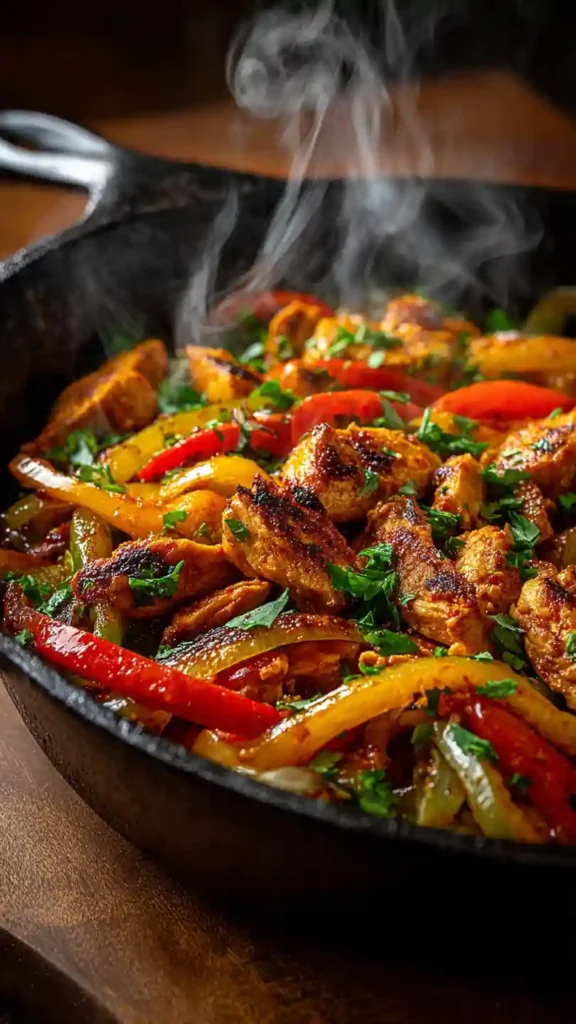
Serve the chicken fajita skillet right away while the vegetables are warm and the chicken is juicy. Add your favorite toppings and sides depending on how you want to serve it.
Pro Tips for Best Results
- Use a large skillet. Crowding the pan makes chicken steam instead of brown.
- Cut the chicken evenly. Thin, even strips cook quickly and stay tender.
- Cook the chicken first, then vegetables. This keeps the chicken from overcooking and lets the vegetables absorb the seasoned pan flavor.
- Do not stir constantly. Letting the chicken sit for a minute or two helps it brown.
- Add lime at the end. Fresh lime tastes brighter when it is not cooked for too long.
- Keep vegetables slightly crisp. Overcooked peppers can turn soft and watery.
- Use a thermometer for chicken. It removes guessing and helps prevent dry or undercooked chicken.
- Warm tortillas before serving. Warm tortillas fold better and make the meal feel more complete.
Common Mistakes to Avoid
Overcrowding the skillet
Too much chicken in the pan at once releases moisture and prevents browning. Cook in batches if needed.
Cutting chicken too thick
Thick strips take longer to cook and may dry out on the outside before the center is done. Keep the pieces thin and even.
Overcooking the vegetables
Peppers and onions should be tender but not mushy. Stop cooking when they still have a little bite.
Adding lime too early
Lime juice tastes best at the end. Cooking it too long can make the flavor less fresh.
Using too much store-bought seasoning
Some fajita seasoning blends are salty. Start with less if using a packaged mix, then adjust after cooking.
Skipping the resting plate
Removing the chicken while vegetables cook keeps it from drying out. Add it back only at the end to warm through.
Variations & Substitutions
Chicken Thigh Fajita Skillet
Use boneless, skinless chicken thighs instead of chicken breast. They are juicier and slightly richer, but may need a minute or two longer to cook.
Low-Carb Chicken Fajita Skillet
Serve the chicken and vegetables over cauliflower rice, shredded lettuce, or zucchini noodles instead of tortillas or regular rice.
Dairy-Free Version
This recipe is naturally dairy-free if you do not add cheese or sour cream as toppings.
Gluten-Free Version
The skillet itself can be gluten-free if your seasoning blend is gluten-free. Serve with corn tortillas, rice, or a gluten-free bowl base.
Spicy Chicken Fajitas
Add cayenne pepper, chipotle powder, jalapeños, or crushed red pepper flakes to the seasoning.
Sheet Pan Method
You can make a sheet pan version by spreading seasoned chicken, peppers, and onions on a baking sheet and roasting until the chicken reaches 165°F. The skillet version gives better browning, but the sheet pan method is convenient.
Shrimp Fajita Skillet
Swap chicken for shrimp if you want a faster seafood version. Shrimp cook quickly, so add them after the vegetables are almost done.
What to Serve With This Recipe
Classic Fajita Sides
Warm tortillas – The easiest way to serve fajitas family-style.
Mexican rice – Adds a hearty base and works well with the seasoned chicken.
Refried beans or black beans – A filling side for non-low-carb meals.
Fresh Toppings
Salsa – Adds freshness and moisture without needing a heavy sauce.
Guacamole – Creamy avocado balances the smoky seasoning.
Shredded lettuce – Adds crunch and makes the meal feel lighter.
Low-Carb Sides
Cauliflower rice – A simple keto-friendly base for fajita bowls.
Lettuce cups – A fresh way to serve the chicken without tortillas.
Avocado salad – Creamy, fresh, and easy to pair with fajita flavors.
Storage, Freezing & Reheating Tips
Store leftover chicken fajita skillet in an airtight container in the refrigerator for up to 3 to 4 days. Let it cool before storing, but do not leave it at room temperature for too long.
For meal prep, divide the chicken and vegetables into containers with rice, cauliflower rice, salad greens, or tortillas packed separately. Keeping tortillas separate prevents them from becoming soggy.
You can freeze the cooked chicken and vegetables for up to 2 months. The flavor holds up well, but the peppers may soften after thawing. For best results, cool completely before freezing and use freezer-safe containers or bags.
Reheat leftovers in a skillet over medium heat with a splash of water or broth to loosen the seasoning. You can also microwave in short intervals, stirring between each one. Avoid overheating because chicken breast can dry out quickly.
Make-Ahead Tips
You can slice the peppers and onions up to 2 days ahead and store them in an airtight container in the refrigerator.
The seasoning blend can be mixed ahead and stored in a small jar. This makes the recipe faster on busy nights.
You can slice the chicken up to 24 hours ahead, but keep it refrigerated and covered. For best texture, season it shortly before cooking or up to a few hours ahead.
Do not partially cook the chicken ahead. If you start cooking it, finish cooking it fully before storing.
FAQs
Can I make chicken fajita skillet ahead of time?
Yes, chicken fajita skillet works well for meal prep. Cook the chicken and vegetables fully, let them cool, then store them in airtight containers. Reheat gently in a skillet or microwave and add fresh lime after reheating for the best flavor.
What is the best chicken to use for fajitas?
Chicken breast is a good choice because it cooks quickly and slices neatly into strips. Boneless chicken thighs are also excellent if you want a juicier, richer result. The most important step is cutting the chicken into even pieces so it cooks evenly.
How do I keep chicken fajitas from getting watery?
Use a hot skillet and avoid overcrowding the pan. If too much chicken or vegetables are packed into the skillet, they release moisture and steam instead of browning. Cooking in batches helps prevent watery fajitas.
Can I make chicken fajita skillet low carb?
Yes, serve the chicken and vegetables over cauliflower rice, lettuce, or a salad instead of tortillas or rice. The skillet filling itself is naturally lower in carbs, especially if you use a seasoning blend without added sugar or starch.
What toppings go well with chicken fajitas?
Good toppings include salsa, guacamole, sour cream, shredded cheese, cilantro, jalapeños, diced tomatoes, and extra lime. For a lighter meal, use salsa, avocado, lettuce, and lime.
More Recipes You’ll Love
Chicken Fajita Skillet
Ingredients
Method
- In a bowl, toss the chicken strips with chili powder, smoked paprika, cumin, garlic powder, onion powder, salt, and black pepper.
- Heat 1 tablespoon olive oil in a large skillet over medium-high heat.
- Add the chicken in a single layer. Cook for 5 to 7 minutes, turning occasionally, until browned and cooked to 165°F.
- Transfer the chicken to a plate.
- Add the remaining 1 tablespoon olive oil to the skillet.
- Add the sliced bell peppers and onion. Cook for 5 to 7 minutes, stirring occasionally, until tender-crisp.
- Return the chicken to the skillet and toss with the vegetables.
- Add lime juice and stir to combine.
- Taste and adjust salt if needed.
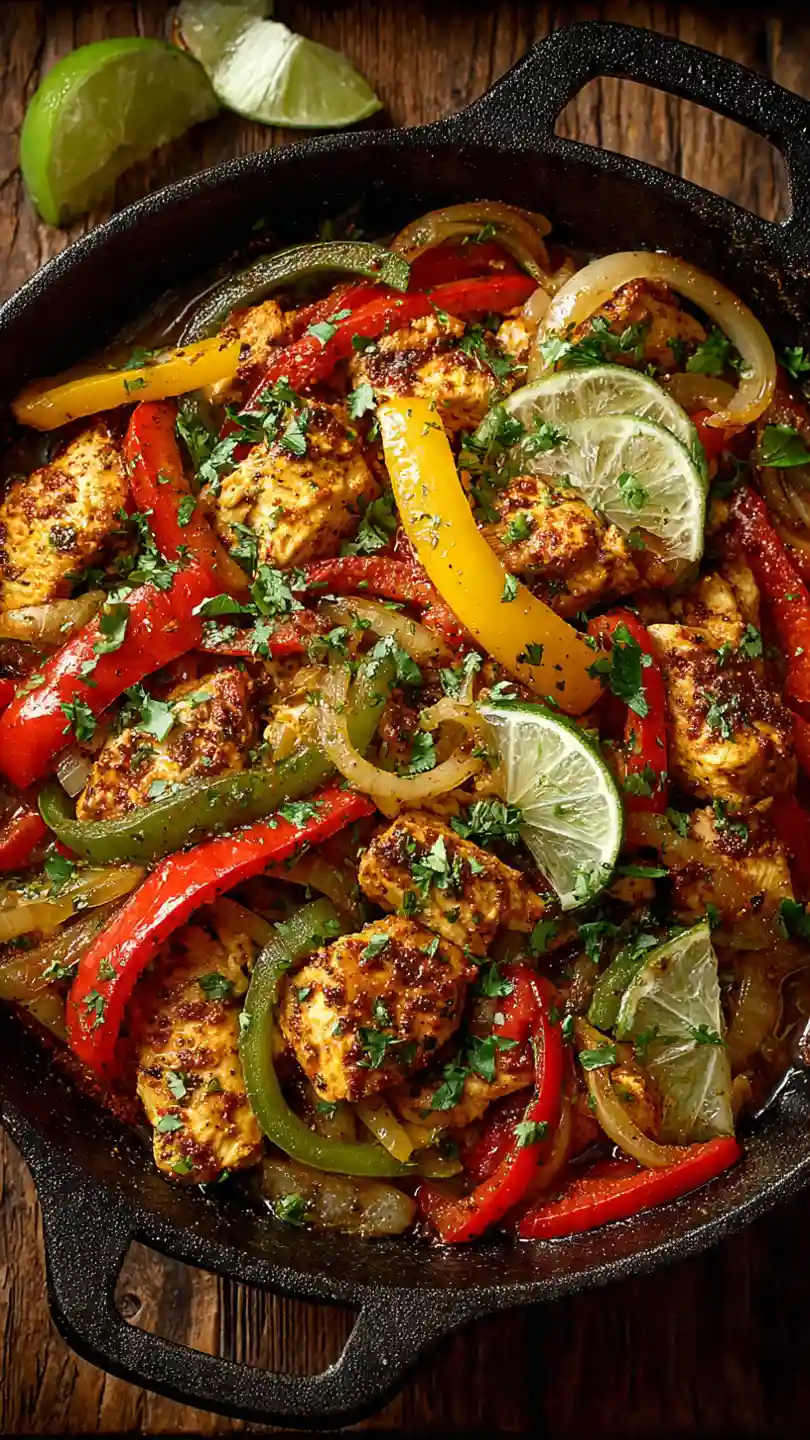
- Garnish with cilantro if using and serve hot with lime wedges.
Notes
- Cook chicken in batches if your skillet is small.
- Do not overcook the peppers; they should stay slightly crisp.
- Add lime juice at the end for the freshest flavor.
- Serve with tortillas, rice, lettuce cups, or cauliflower rice.
- Store leftovers in the refrigerator for up to 3 to 4 days.
Protein: 38g
Fat: 11g
Carbs: 10g