Honey Garlic Chicken Bites

Honey Garlic Chicken Bites are made with tender pieces of chicken coated in a glossy sauce that balances sweetness, garlic, and savory flavor. The chicken cooks quickly in one skillet, making this a practical recipe when you want something satisfying without spending your whole evening in the kitchen.
This version keeps the process simple. The chicken is lightly coated before cooking, which helps it develop golden edges while keeping the inside juicy. The sauce is added near the end so the honey does not burn and the garlic stays flavorful instead of turning bitter.
Serve these chicken bites over rice for dinner, tuck them into lettuce cups, or place them on a platter with toothpicks for an easy party appetizer.
What Honey Garlic Chicken Bites Taste Like
These chicken bites have a sweet and savory flavor with plenty of fresh garlic. The soy sauce adds saltiness and depth, while a small splash of vinegar prevents the honey sauce from tasting overly sweet.
The outside of the chicken becomes lightly crisp and golden before being coated in the sticky sauce. Inside, the pieces stay tender and juicy.
The finished sauce is thick enough to cling to every piece without becoming heavy or gummy. Green onions and sesame seeds add freshness and a little texture at the end.
Why You’ll Love This Recipe
- Ready in about 30 minutes.
- Uses one skillet for easier cleanup.
- Made with simple, easy-to-find ingredients.
- Works as both a main dish and an appetizer.
- The sauce can be adjusted to taste sweeter, saltier, or spicier.
- Easy to serve with rice, noodles, vegetables, or salad.
- Leftovers reheat well for lunch the next day.
- Beginner-friendly with no complicated cooking techniques.
Best Occasions to Serve Honey Garlic Chicken Bites
Busy Weeknight Dinners
Serve the chicken over steamed rice with broccoli, green beans, or stir-fried vegetables. Because the chicken is cut into small pieces, it cooks much faster than whole chicken breasts.
Game Day and Parties
Transfer the finished bites to a warm serving dish and provide toothpicks. The sticky sauce makes them flavorful enough to serve without an additional dip.
Family Dinners
The mild honey garlic flavor is approachable for both adults and children. Keep the red pepper flakes out of the main batch and serve them separately for anyone who wants extra heat.
Meal Prep
Divide the chicken between containers with rice and roasted vegetables. Keep the portions refrigerated and reheat them for quick lunches during the week.
Casual Gatherings
These chicken bites are easy to place alongside sliders, taquitos, skewers, and other finger foods without requiring plates and knives.
Step-by-Step Cooking Instructions
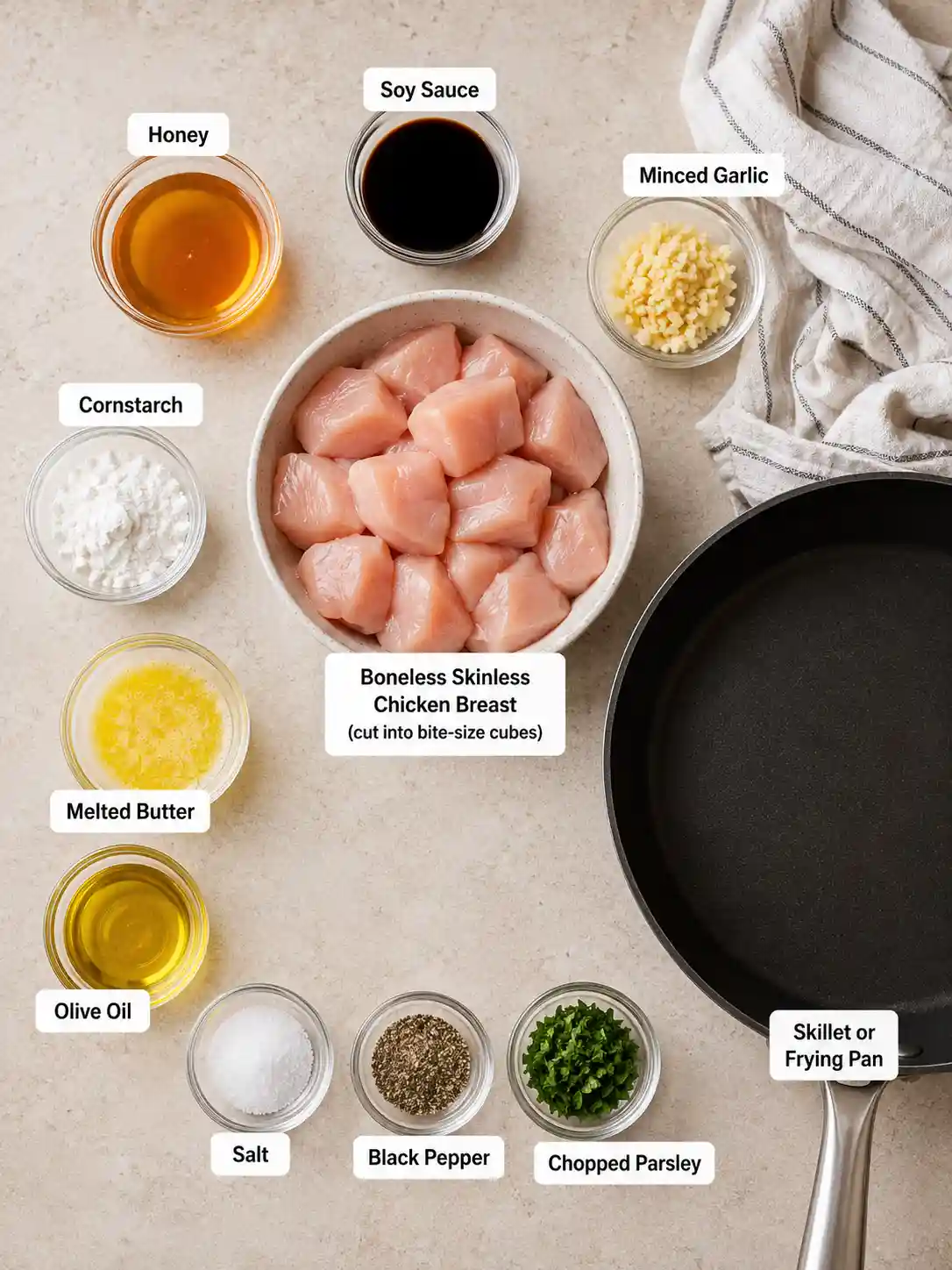
1. Cut the Chicken Evenly
Pat the chicken dry before cutting it into bite-sized pieces. Removing extra surface moisture helps the coating stick and allows the chicken to brown properly.
Try to keep the pieces close to the same size. Uneven pieces will cook at different speeds, which can leave larger pieces undercooked while smaller pieces become dry.
2. Coat the Chicken
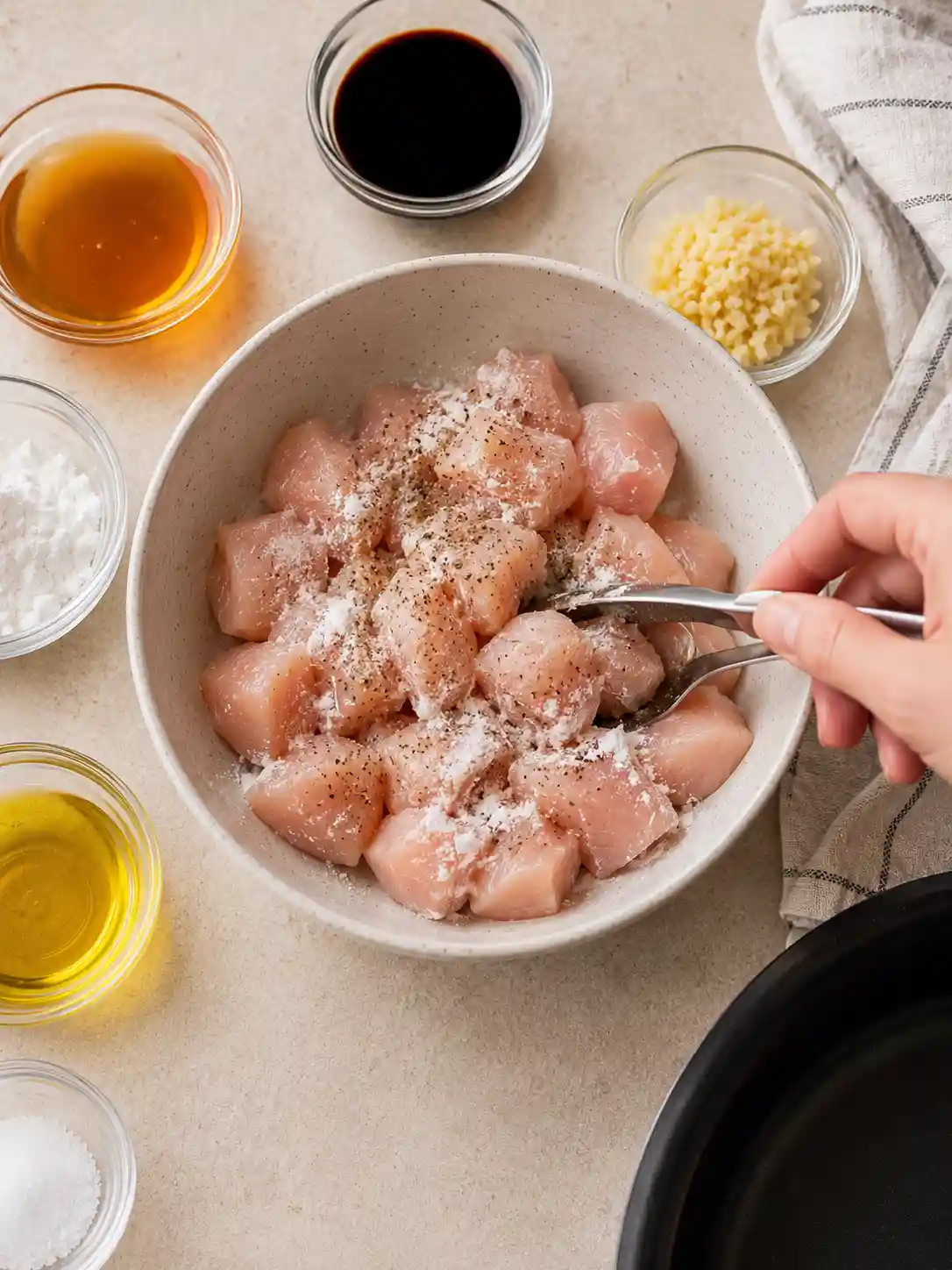
Place the chicken in a bowl and season it evenly. Sprinkle the cornstarch over the pieces, then toss until every piece has a thin, dry coating.
You do not need a heavy breading. A light layer is enough to create golden edges and later help the sauce cling to the chicken.
3. Mix the Sauce
Whisk the sauce ingredients together before you begin cooking. Once the chicken is in the skillet, the recipe moves quickly, so having the sauce ready prevents the chicken from overcooking.
Stir until the honey is fully blended with the other liquids. The sauce may look thin at this stage, but it will reduce and thicken in the hot skillet.
4. Preheat the Skillet
Heat a large skillet over medium-high heat before adding the oil. The pan should be hot enough that the chicken begins sizzling as soon as it touches the surface.
A properly heated skillet creates better browning and prevents the chicken from releasing too much liquid.
5. Cook the Chicken in a Single Layer
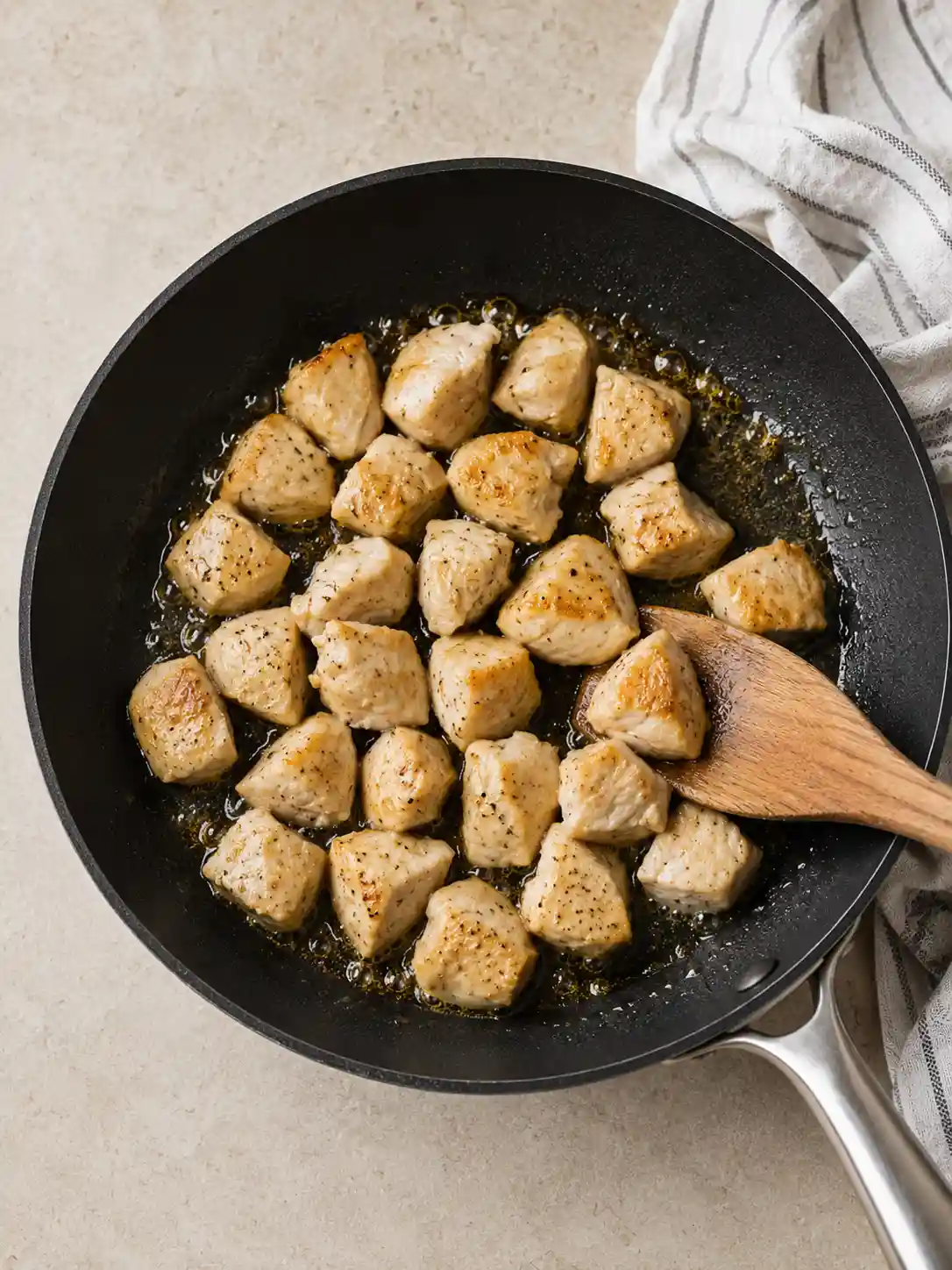
Arrange the chicken pieces in one layer with a little space between them. Avoid pouring the entire bowl into a small skillet if the pieces will overlap.
Let the first side cook without moving it constantly. Once the bottom is golden, turn the pieces and continue cooking until the chicken is browned on several sides and almost cooked through.
Cook in two batches when necessary. Crowding the skillet will steam the chicken instead of browning it.
6. Briefly Cook the Garlic
Reduce the heat slightly before adding the minced garlic. Stir it around the chicken for about 20 to 30 seconds.
Garlic cooks very quickly. Add the sauce as soon as the garlic smells fragrant so it does not burn.

7. Add and Reduce the Sauce
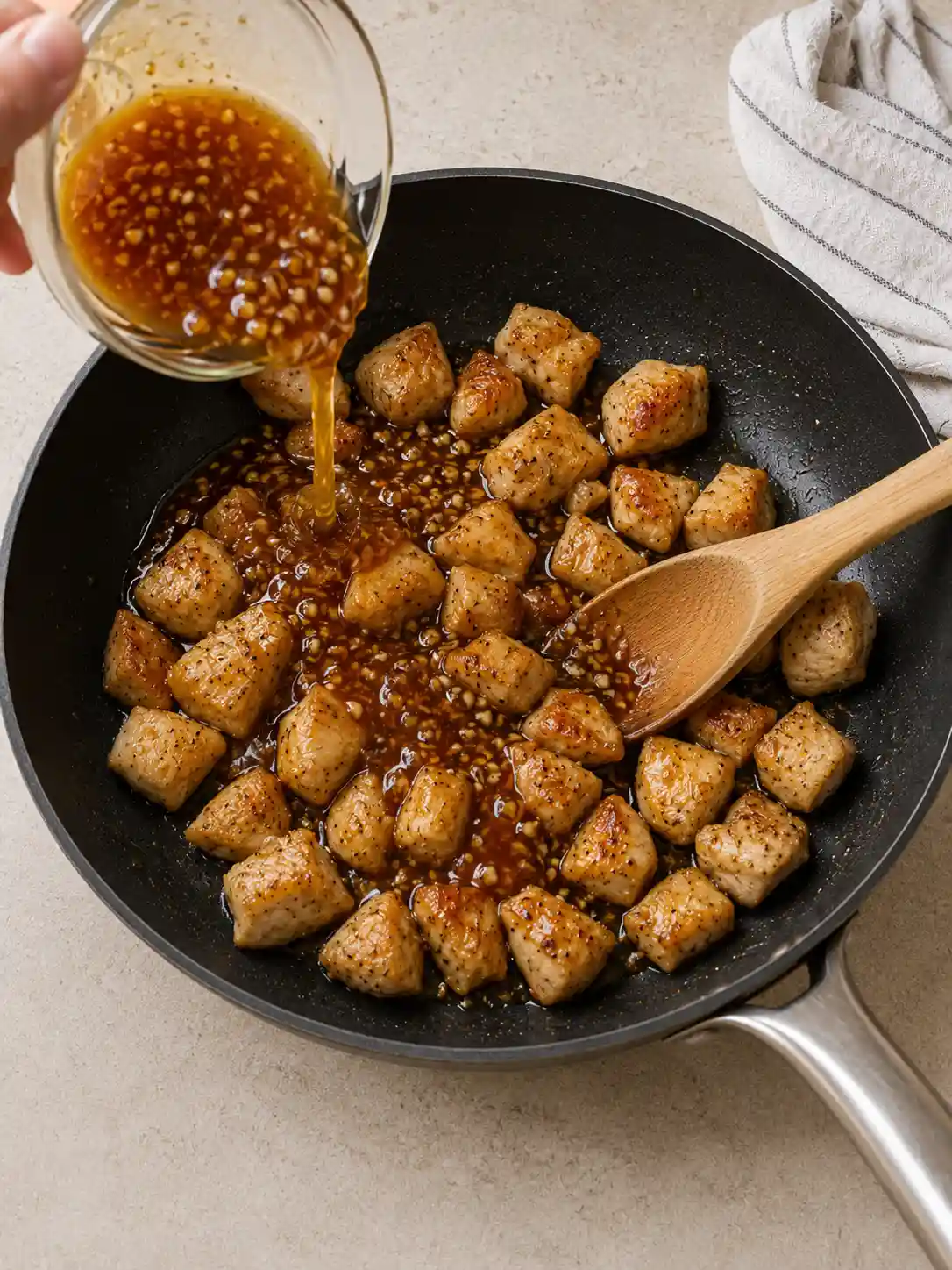
Pour the prepared honey garlic mixture into the skillet. Stir to coat the chicken, then allow the sauce to simmer gently.
As the sauce bubbles, the water will reduce and the honey mixture will become thicker. Stir frequently so the chicken is coated evenly and the sauce does not stick to the bottom.
8. Check the Chicken
Remove the skillet from the heat once the chicken is cooked through and the sauce looks glossy. Chicken should reach an internal temperature of 165°F when checked in the thickest piece.
Do not keep cooking after the sauce has thickened. Honey-based sauces can become overly sticky or burn when left over high heat for too long.
9. Garnish and Serve
Sprinkle sliced green onions and sesame seeds over the finished chicken. Serve it immediately while the sauce is warm and glossy.
For dinner, spoon the chicken and extra sauce over rice. For an appetizer, place the pieces on a serving platter and add toothpicks.
Pro Tips for the Best Results
Use a Large Skillet
The chicken needs enough room to make direct contact with the pan. A large skillet creates better browning and shortens the cooking time.
Pat the Chicken Dry
Wet chicken will release steam in the skillet. Drying it first helps the cornstarch form a more even coating.
Do Not Add the Honey Sauce Too Early
Honey can scorch over high heat. Cook the chicken first, lower the heat slightly, and then add the sauce during the final few minutes.
Mince the Garlic Finely
Large pieces of garlic may remain harsh or burn before the sauce finishes reducing. Finely minced garlic distributes more evenly throughout the sauce.
Adjust the Heat as the Sauce Thickens
The sauce can change from thin to sticky quickly. Lower the heat if it begins bubbling aggressively or sticking around the edges of the skillet.
Cook in Batches When Needed
Two well-browned batches will taste better than one crowded batch of pale, steamed chicken.
Double the Sauce for Rice Bowls
The standard amount coats the chicken generously. When serving it over a large portion of rice or noodles, make one and a half times the sauce so there is extra for drizzling.
Variations and Substitutions
Spicy Honey Garlic Chicken Bites
Add red pepper flakes, chili garlic sauce, or sriracha to the sauce. Start with a small amount and increase it after tasting.
Honey Garlic Chicken Thigh Bites
Use boneless, skinless chicken thighs for a richer flavor and slightly juicier texture. They may require an extra minute or two of cooking depending on their size.
Gluten-Free Version
Use certified gluten-free tamari instead of regular soy sauce. Check the labels on every prepared sauce to confirm that no wheat-based ingredients are included.
Air Fryer Chicken Bites
Coat the chicken as directed and lightly spray it with oil. Air fry at 400°F until browned and cooked through, shaking the basket halfway through. Prepare the sauce separately in a small saucepan, then toss it with the cooked chicken.
Baked Honey Garlic Chicken Bites
Spread the coated chicken on a lined baking sheet and bake at 425°F until cooked through. Simmer the sauce separately and combine it with the chicken just before serving.
Lemon Honey Garlic Chicken
Add fresh lemon zest and replace part of the vinegar with lemon juice. This gives the sauce a brighter, fresher flavor.
Vegetable Add-In
After cooking the chicken, sauté bell peppers, broccoli, snap peas, or zucchini in the same skillet. Return the chicken to the pan before adding the sauce.
What to Serve With Honey Garlic Chicken Bites
For a complete dinner, serve the chicken with:
- Steamed jasmine or basmati rice
- Egg fried rice
- Garlic noodles
- Roasted broccoli
- Stir-fried vegetables
- Cucumber salad
- Lettuce wraps
- Cauliflower rice
- Sesame green beans
- Asian-style slaw
Storage, Freezing, and Reheating Tips
Refrigerating
Allow the chicken to cool before transferring it to an airtight container. Refrigerate it for up to four days.
The sauce will thicken as it chills, but it should loosen again during reheating.
Freezing
Place cooled chicken bites in a freezer-safe container and freeze them for up to two months. Freeze in smaller portions so you can thaw only what you need.
The coating may soften slightly after freezing, but the flavor will remain good.
Reheating on the Stovetop
Place the chicken in a skillet over medium-low heat. Add a small splash of water and stir gently until the sauce loosens and the chicken is heated through.
Reheating in the Microwave
Cover the chicken loosely and heat it in short intervals, stirring between each interval. Avoid overheating because bite-sized chicken pieces can dry out quickly.
Reheating in the Air Fryer
The air fryer can dry out the sauce, so it is not the best option for fully sauced leftovers. It works better when the cooked chicken and sauce have been stored separately.
FAQs
Can I use chicken thighs instead of chicken breasts?
Yes. Boneless, skinless chicken thighs work very well and usually stay juicier than chicken breasts. Cut them into evenly sized pieces and cook until they reach an internal temperature of 165°F. Depending on their thickness, thigh pieces may need slightly longer in the skillet.
How do I keep honey garlic sauce from burning?
Cook the chicken before adding the sauce, then reduce the skillet to medium or medium-low heat. Honey burns more easily than sugar dissolved in a thin liquid, so stir frequently once the sauce begins thickening. Remove the skillet from the heat as soon as the sauce becomes glossy and coats the chicken.
Why did my chicken bites turn out soggy?
The skillet may have been crowded, the chicken may not have been dried thoroughly, or the pan may not have been hot enough. Cook the chicken in a single layer and use batches when necessary. Also avoid stirring constantly during the first few minutes, since the chicken needs uninterrupted contact with the skillet to brown.
Can I make honey garlic chicken bites ahead of time?
Yes, but they have the best texture when freshly cooked. For advance preparation, cut and season the chicken, then refrigerate it separately from the mixed sauce. Cook everything shortly before serving. You can also fully cook the recipe and gently reheat it with a small splash of water.
What can I use instead of honey?
Maple syrup is the easiest substitute, although it will create a thinner sauce with a slightly different flavor. Brown sugar can also work when dissolved in a little warm water. Avoid using a dry sugar replacement without adjusting the liquid because the sauce may become grainy or reduce too quickly.
Honey Garlic Chicken Bites
Ingredients
Method
- Pat the chicken dry and cut it into 1-inch pieces.
- Place the chicken in a bowl. Add the salt, black pepper, garlic powder, and cornstarch. Toss until evenly coated.
- In a small bowl, whisk together the honey, soy sauce, rice vinegar, sesame oil, ginger, and red pepper flakes.
- Heat 1 tablespoon of vegetable oil in a large skillet over medium-high heat.
- Add half of the chicken in a single layer. Cook for 5 to 7 minutes, turning occasionally, until golden and nearly cooked through. Transfer it to a plate.
- Add the remaining oil and cook the second batch. Return all the chicken to the skillet.
- Reduce the heat to medium. Add the minced garlic and cook for 20 to 30 seconds, stirring constantly.
- Pour the prepared sauce into the skillet. Stir and simmer for 2 to 4 minutes, until the sauce thickens and coats the chicken.
- Confirm that the chicken has reached an internal temperature of 165°F.
- Remove from the heat and garnish with green onions and sesame seeds. Serve immediately.
Notes
- Cut the chicken into evenly sized pieces so everything finishes cooking at the same time.
- Cook in batches rather than overcrowding the skillet.
- Add the honey sauce only after the chicken is almost fully cooked.
- Reduce the heat if the sauce begins thickening too quickly.
- Chicken thighs can be substituted for chicken breasts.
- Use gluten-free tamari for a gluten-free version.
- Double or increase the sauce when serving the chicken over rice or noodles.
- Nutrition does not include rice, noodles, vegetables, or other side dishes.
Nutrition Per Serving
- Calories: 415
- Protein: 39 grams
- Fat: 12 grams
- Carbohydrates: 38 grams
- Saturated Fat: 2 grams
- Fiber: 1 gram
- Sugar: 25 grams
- Sodium: 790 milligrams